
Guilford CT Neighborhood Guide: Explore the Best Areas in 2026
Guilford offers historic charm, shoreline scenery, and strong schools within a compact coastal town. According to U.S. Census QuickFacts, Guilford’s population sits in the range of 22,000 to 23,000 residents as of 2022, giving neighborhoods a small-town scale while still supporting year-round businesses. This Guilford CT neighborhood guide for 2026 highlights how distinct areas around the Guilford Green, shoreline enclaves, and inland lake districts differ in character, housing stock, and daily livability.
What Defines Guilford’s Historic Green and Town Center?
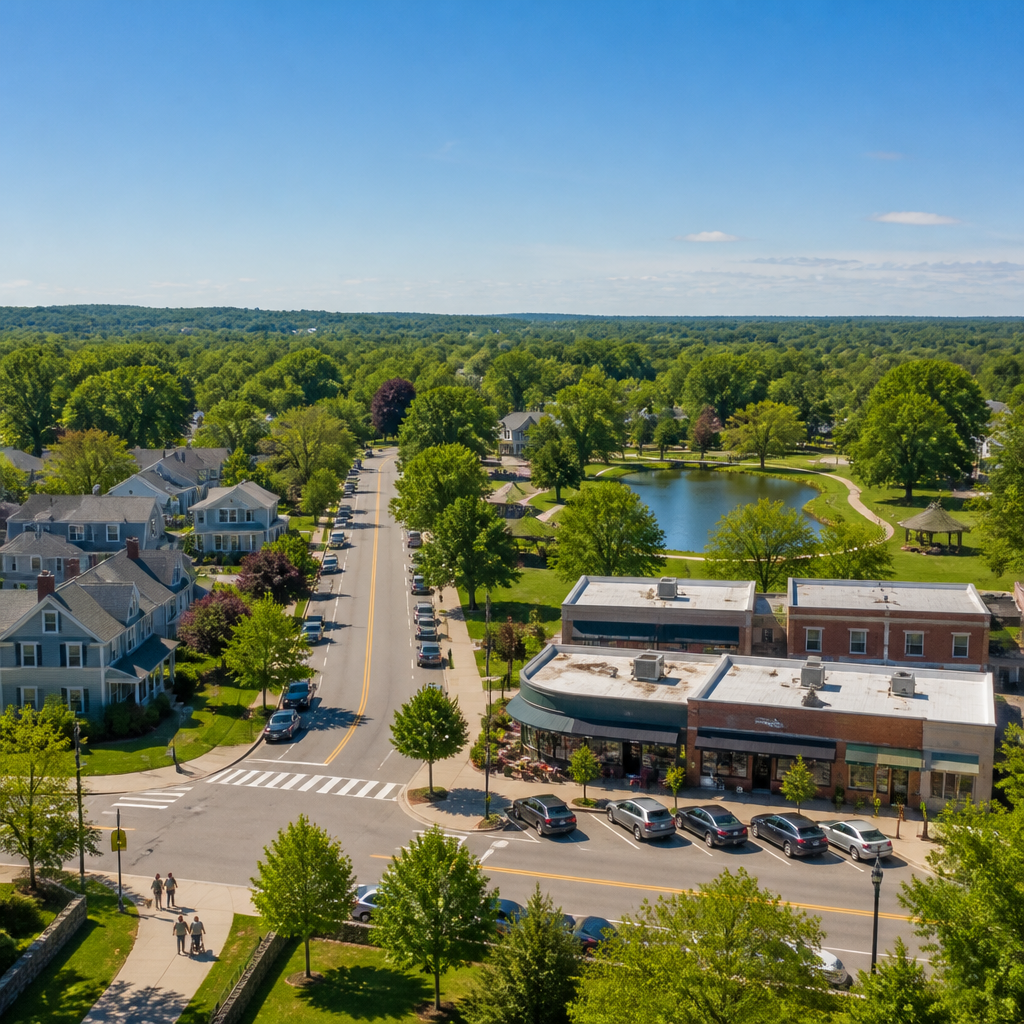
The historic Guilford Green anchors the town center with a broad, tree-framed common surrounded by churches and boutiques. According to Town of Guilford materials, the Green spans roughly 12 acres, making it one of Connecticut’s larger traditional commons. Streets such as Whitfield Street, Church Street, and Broad Street feature antique colonials, Greek Revival homes, and carefully renovated storefronts. Sidewalks connect easily to the Guilford Free Library, Town Hall, and the Henry Whitfield State Museum.
Housing around the Green ranges from compact condominiums above commercial spaces to single-family homes within a half-mile radius. According to Realtor.com, list prices for homes within central Guilford often fall between $450,000 and $750,000 as of early 2026, depending on lot size and level of renovation. Limited inventory and historic zoning guidelines help preserve architectural character, which in turn supports consistent buyer demand for properties close to the Green.
Late afternoon along Whitfield Street brings the soft clink of dishes from nearby cafés, the scent of roasted coffee drifting from Perk on Church, and the glow of shop windows facing the Guilford Green. Footsteps echo across the brick sidewalks between Page Hardware and the Guilford Free Library, while traffic along Boston Street hums softly in the background. The combination of restored facades and mature maples produces a textured, almost cinematic main-street atmosphere in every season.
How Do Guilford’s Shoreline Neighborhoods Compare?
Guilford’s shoreline stretches along Long Island Sound, encompassing Jacobs Beach, Chaffinch Island Park, and historic Sachems Head. According to the Guilford Parks and Recreation department, Jacobs Beach sits less than 1 mile south of the Green, while Chaffinch Island Park lies about 3 miles southwest. Neighborhoods along Seaside Avenue, Mulberry Point Road, and Old Quarry Road mix seasonal cottages, mid-century ranches, and substantial waterfront residences, many with private access to coves and marinas.
Waterfront pricing reflects both scarcity and direct Sound views. Based on current listings tracked by Redfin, premium shoreline homes in areas such as Sachems Head and Old Quarry generally list between $1.3 million and $2.4 million in early 2026, with ultra-luxury estates occasionally reaching or exceeding $2.4M. Days on market along the shoreline often fall in the range of 25 to 45 days, shorter than inland segments due to limited direct-waterfront inventory.
Public shoreline access also shapes daily life in these neighborhoods. According to the Connecticut DEEP, nearby Hammonasset Beach State Park in Madison sees roughly 1.3 to 1.5 million visitors annually, underscoring how strongly shoreline amenities influence regional recreation patterns. Residents of Guilford’s coastal districts benefit from quick trips along Route 1 to this major park while maintaining quieter, smaller-scale beaches at Jacobs Beach and Chaffinch Island Park for daily walks and launching kayaks.
What Characterizes Guilford’s Lake and Wooded Neighborhoods?
The Guilford Lakes district, set north of Route 80, centers on several interconnected ponds and the Guilford Lakes Golf Course. According to Walk Score, this area typically posts scores in the 10 to 25 range, reflecting a car-dependent but scenic, natural setting compared with the more walkable town center, which reaches the 55 to 65 range. Homes along Lakeside Drive, Durham Road, and Long Hill Road feature decks, wooded lots, and seasonal water views that contrast with the denser streets around the Green.
An early summer evening on Lakeside Drive often carries the crisp scent of pine and freshwater, mixed with grilled food wafting from porches overlooking Guilford Lakes. The gentle thwack of a tee shot from Guilford Lakes Golf Course drifts across the water, while tree frogs create a layered chorus under the dim glow of dock lights. Gravel underfoot on narrow camp roads and the cool air off the water emphasize the retreat-like feeling of this inland neighborhood.
Pricing in these lake and wooded enclaves tends to run below many shoreline segments but above some outer rural pockets. According to Realtor.com single-family data, recent listings around Guilford Lakes in early 2026 often fall between $375,000 and $600,000, depending on direct water frontage and modern updates. Lot sizes commonly range from about 0.25 to just over 1 acre, providing a balance between manageable maintenance and privacy.
How Strong Are Schools, Parks, and Community Amenities in Guilford?
Guilford’s public schools rank as a major draw for many households. According to GreatSchools, Guilford High School holds ratings in the 8 to 9 out of 10 range, while Adams Middle School typically scores between 7 and 8. GreatSchools also reports student–teacher ratios in the district generally ranging from about 11:1 to 13:1, supporting smaller class environments in comparison with many larger Connecticut systems.
Parks and trails knit together neighborhoods from the shoreline to inland hills. The Guilford Land Conservation Trust maintains preserves such as Westwoods, with over 1,200 acres of protected land and roughly 39 miles of trails, according to trust data. Families in areas near Peddlers Road, Dunk Rock Road, and Moose Hill Road gain easy access to trailheads, ball fields, and playgrounds, including facilities at Bittner Park and the Guilford Lakes School complex.
Municipal amenities also help differentiate Guilford from smaller shoreline towns. According to the Parks and Recreation Department, the community center on Church Street offers more than 50 seasonal programs annually, from youth sports to adult fitness. Combined with resources like the Guilford Free Library on Park Street and local institutions such as the Hyland House Museum on Boston Street, these amenities create year-round activity that supports neighboring businesses on Whitfield Street and Broad Street.
How Convenient Is Transportation and Daily Commuting from Guilford?
Guilford’s location along Interstate 95 and the Shore Line East rail corridor shapes commuting patterns. According to Shore Line East schedules, trains connect Guilford Station on Pine Street to New Haven’s Union Station in approximately 20 to 25 minutes, with multiple departures on weekdays. I‑95 access via Exit 58 near Boston Post Road enables car commutes of roughly 14 to 18 miles to downtown New Haven, depending on the chosen route.
For regional travel, Shore Line East also links Guilford to New London and connects with Amtrak services in New Haven. According to CTtransit, combined rail and bus options expand access to New York City within about 2 to 2.5 hours, depending on transfer timing. This connectivity helps shoreline and town-center neighborhoods, especially those near State Street, Water Street, and Whitfield Street, function as realistic bases for hybrid in-office and remote work schedules.
Local traffic patterns influence neighborhood appeal as well. Town assessments referenced by the Engineering and Public Works department highlight Boston Post Road and Route 77 (Church Street) as primary north–south and east–west corridors, carrying thousands of vehicles daily. Residential pockets along Campfire Road, Peddlers Road, and Little Meadow Road remain quieter, while still staying within approximately 5 to 10 minutes driving distance of the Green, schools, and grocery options like the Bishops Orchards Farm Market on New England Road.
How Can This Guilford CT Neighborhood Guide Support 2026 Housing Decisions?
Pricing, taxes, and neighborhood feel all intersect in Guilford’s market. According to Redfin, median sale prices across Guilford in late 2025 and early 2026 generally fall between $525,000 and $675,000, with typical days on market ranging from about 30 to 50 days. The Town of Guilford Tax Collector reports a property tax mill rate in the approximate range of 30 to 33 mills, influencing long-term ownership costs across different neighborhoods.
Understanding micro-markets within this broader range is essential. Central streets near the Green, such as Whitfield Street and Park Street, often command premiums above townwide medians, while outer segments near Route 80, Little Meadow Road, and Clapboard Hill Road provide relatively more space per dollar. Waterfront enclaves like Sachems Head and Mulberry Point typically sit at the top of the price spectrum, whereas inland cul-de-sacs off Peddlers Road or Goose Lane may offer homes slightly under townwide medians while retaining strong access to schools and amenities.
Different lifestyle priorities naturally point toward different areas in this Guilford CT neighborhood guide. Those prioritizing easy rail access may focus within roughly 1 mile of Guilford Station on Pine Street, according to distance estimates from Google Maps. Residents whose primary goal is daily access to Long Island Sound might concentrate on streets near Seaside Avenue, Old Quarry Road, and Trolley Road. Others seeking wooded privacy and lake access often favor Guilford Lakes and interior corridors off Route 80 and Long Hill Road.
The approximately 22,000 to 23,000 resident population cited at the start of this guide reflects a community large enough to support diverse neighborhoods yet small enough for strong local identity. That population figure from the opening underscores how each pocket—shoreline, town center, and lake district—plays a distinct role within a single market. The New Haven Middlesex Association of Realtors market reports provide detailed, updated insight into inventory levels and pricing for Guilford and surrounding shoreline towns. Buyers who monitor those reports closely and register listing alerts through association-linked portals before the late-spring surge in May, then commit to touring suitable properties within 24 to 48 hours of listing, tend to secure stronger terms and avoid the steeper bidding pressures that frequently emerge by early summer.
FROM OUR BLOG


Milford CT Waterfront Properties: Your 2026 Buying Guide
Milford CT Waterfront Properties: Your 2026 Buying Guide Milford’s shoreline stretches for more than 17 miles along Long Island Sound, giving the city one of the longest coastlines in Connecticut. According to City of Milford Economic Development, this extensive waterfront includes public beaches, m
Moving to Trumbull CT: A Complete Guide for New Residents in 2026
Moving to Trumbull CT: A Complete Guide for New Residents in 2026 Moving to Trumbull CT in 2026 places new residents in a Fairfield County town often noted for its balance of space, schools, and access. According to U.S. Census QuickFacts, Trumbull’s population sits near $36,000 residents as of 2023

November Home Tips & Market Update | Connecticut Real Estate
As Connecticut heads into the colder months, many homeowners, buyers, and renters are wondering how to prepare their homes and what’s happening in the November housing market. Whether you’re planning to buy, sell, or simply make smart home updates before winter, here’s what to know to stay cozy, s